
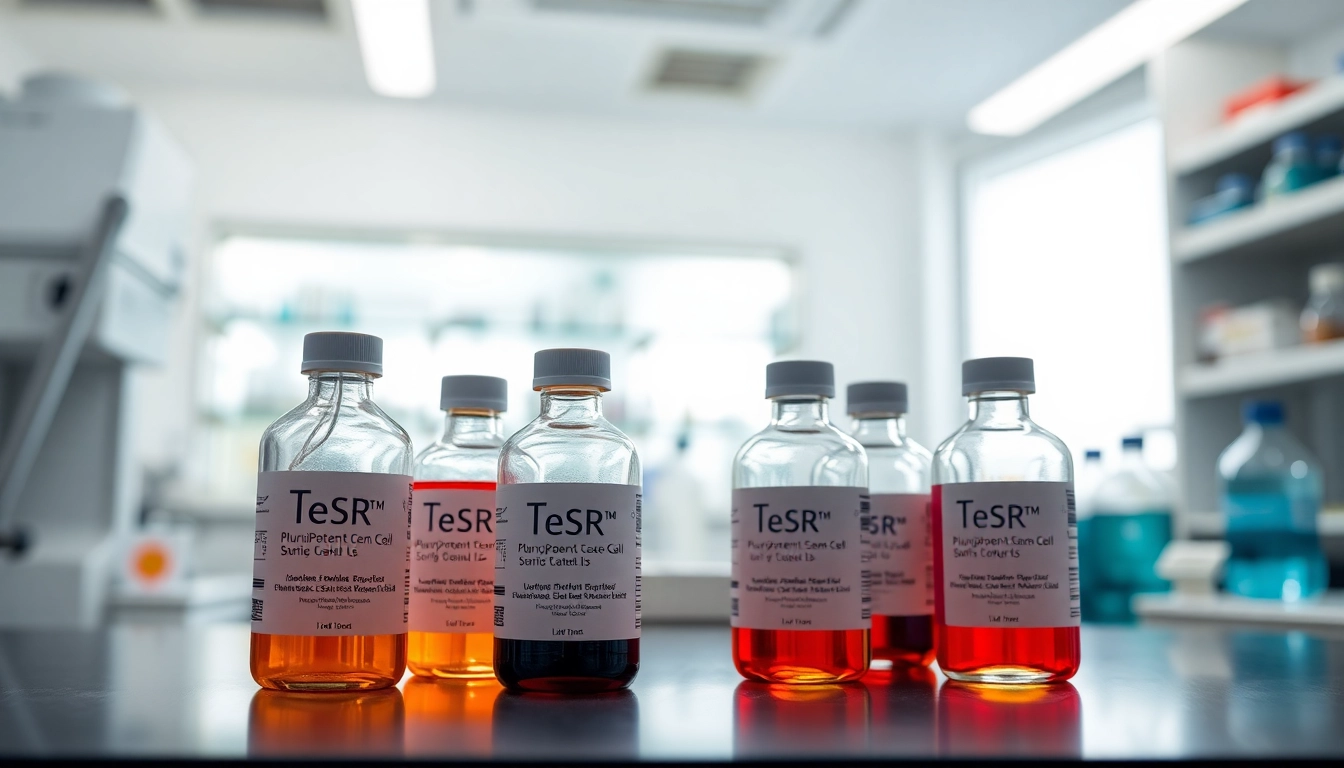
Introduction to TeSR™ Feeder-Free Media
Pluripotent stem cell (PSC) research plays a pivotal role in regenerative medicine and developmental biology. The ability to maintain stem cells in a state that allows for differentiation into any cell type is nothing short of remarkable. Central to this functionality is the choice of culture media. Among various formulations, the TeSR™ family of feeder-free media has emerged as an essential tool for researchers working with human embryonic stem cells (hESCs) and induced pluripotent stem cells (iPSCs). In this article, we will delve into the components and advantages of TeSR™ media, how it enhances the research landscape, and real-world applications in stem cell research, exploring why many scientists choose to use TeSR™ feeder-free culture media for their crucial studies, from reprogramming to differentiation.
What is Pluripotent Stem Cell Culture?
Pluripotent stem cells are unique in their potential to differentiate into any cell type, making them invaluable for scientific research and therapeutic applications. The culture of these cells requires precise conditions to maintain their pluripotency and support cell division. Traditional methods often rely on feeder layers, which can introduce variations and complexities in the culture process. Feeder-free media, such as the TeSR™ series, provide a more controlled environment, eliminating the heterogeneity that comes from feeder cells. This advancement facilitates the generation and maintenance of stable hPSC lines, allowing researchers to focus on specific scientific inquiries through enhanced consistency and experiment reproducibility.
Importance of Feeder-Free Media
Feeder-free media offer several distinct advantages over traditional feeder-dependent culture systems. Most notably, they enhance reproducibility and reliability in experiments. Since feeder cells can create variability in cell growth and differentiation, breaking away from this dependency minimizes variation and allows better control over the culture environment. TeSR™ media formulations are based on well-published scientific principles and are designed to support the optimal growth and maintenance of hPSCs without the complications of animal-derived components, thus reducing the potential for contamination. The profound implications of this are seen in the accelerated pace of advancements in regenerative medicine and genetic studies.
Overview of the TeSR™ Media Family
The TeSR™ media family consists of several formulations optimized for different stages of pluripotent stem cell research. Key products include:
- mTeSR™ Plus: A stabilized maintenance medium designed to support hPSC growth with enhanced buffering capacity.
- TeSR™-AOF: An animal-origin-free media version promoting higher biosafety.
- TeSR™-E8™: A simpler formulation containing only essential media components.
- ReproTeSR™: Specialized for reprogramming somatic cells.
- mFreSR™: A cryopreservation formulation ensuring cell viability during freezing.
Each formulation is developed to address specific needs in stem cell research, providing a comprehensive, customizable toolbox for scientists.
Applications of TeSR™ Culture Media
Using TeSR™ for Human ES and iPS Cell Reprogramming
The process of reprogramming human somatic cells into iPSCs traditionally faced significant hurdles. Utilizing TeSR™ media, particularly ReproTeSR™, researchers can achieve higher efficiencies in conversion rates, enabling more reliable generation of iPSC lines. This medium not only supports the optimal growth of resultant colonies but also allows researchers to more efficiently identify morphologically distinct iPSCs. Studies indicate that cells grown in TeSR™ media retain superior pluripotency markers and exhibit expression patterns aligned with in vivo development.
Maintenance and Expansion of hPSCs
One of the most critical aspects of stem cell research is maintaining cells in a stable, undifferentiated state. When using mTeSR™ Plus, researchers observe extended periods without medium changes, which is particularly advantageous for long-term experiments. This ease of use contributes significantly to laboratory workflow efficiency. Furthermore, quality attributes such as the retention of pluripotency, genomic stability, and the ability to expand cultures are consistently reported with TeSR™ media. Enhanced buffering systems also help maintain optimal pH levels, further ensuring cell quality over time.
Effective Differentiation Techniques
The ability to reliably differentiate hPSCs into specific cell lineages—such as cardiomyocytes or neurons—has accelerated research in therapies for various diseases. TeSR™ media are designed to seamlessly transition from maintenance to differentiation protocols. For instance, media like TeSR™-E6 and TeSR™-E5 have been shown to support robust differentiation pathways. Researchers utilizing these formulations have reported increased efficiency and consistency in differentiating stem cells into functional cell types, thus advancing clinical applications and drug screening efforts.
Comparative Analysis of TeSR™ Media
mTeSR™ Plus vs. Other Maintenance Media
Within the landscape of hPSC maintenance media, mTeSR™ Plus stands out due to its rigorous formulation and improved features over traditional media like mTeSR™1. Unlike its predecessor, mTeSR™ Plus is built with stabilized components that prolong the functional life of the medium. Enhanced buffering minimizes the impact of acidification between media changes, safeguarding cellular integrity. Researchers have found that using mTeSR™ Plus results in healthier cell cultures with robust proliferation rates and improved differentiation potential.
Evaluating Formulations: mTeSR™1 vs. TeSR™-E8™
Another key comparison lies between mTeSR™1 and TeSR™-E8™. While mTeSR™1 is robust for ongoing cultures, TeSR™-E8™ offers a simplified composition for maintenance that reduces costs without compromising cell quality. Research indicates that TeSR™-E8™, which uses fewer components, results in efficient culture with comparable pluripotency attributes. The simplicity of TeSR™-E8™ makes it an attractive option for labs seeking to optimize their workflow or reduce reagent costs while still ensuring high cell viability and performance.
Insights from User Testimonials
User feedback on TeSR™ media has overwhelmingly been positive. Many researchers commend its user-friendly nature and consistent results. Specific testimonials highlight experiences where transitioning to TeSR™ media has bolstered their research outcomes, minimizing variability and increasing efficiency. For instance, in studies concerning cardiovascular differentiation, researchers noted a marked improvement in the yield and quality of cardiomyocytes when leveraging TeSR™-E6 as a differentiation medium instead of traditional protocols.
Scientific Resources and Quality Control
Rigorous Testing of TeSR™ Media
STEMCELL Technologies implements stringent quality control measures throughout the production of TeSR™ media. Each batch undergoes comprehensive testing to ensure consistent performance across experimental conditions. This includes rigorous pre-screening of all raw materials and meticulous assessments of media’s physical properties and efficacy. Results from standardization exercises demonstrate excellent batch-to-batch reproducibility, a key factor that enhances reliability in scientific experiments.
Quality Assurance for hPSC Cultures
Additionally, maintaining the quality of hPSC cultures is non-negotiable in research, especially given the critical implications for potential therapies. The adherence to current Good Manufacturing Practices (cGMP) further underscores the commitment to excellence across the TeSR™ product line. By ensuring that every component is consistently produced, researchers can have confidence in the outcomes of their studies, which rely on high-quality hPSC preparations.
Recommendations and Best Practices
The use of TeSR™ media requires a thorough understanding of best practices to maximize its benefits. Recommendations include maintaining proper environmental conditions in the incubator, such as oxygen and carbon dioxide tensions, and optimal culture density, which significantly impact cell health and differentiation outcomes. Furthermore, regular skill training for personnel handling these cell cultures is pivotal in leveraging the full potential of the TeSR™ media family.
Future Directions in Stem Cell Research
Advancements in Cryopreservation Techniques
As stem cell research continues to evolve, advancements in cryopreservation techniques become increasingly important. The TeSR™ line’s mFreSR™ has positioned itself as a leader in cryopreservation, ensuring high viability post-thawing. Future research will likely focus on perfecting this technology to expand applications in clinical settings, as well as collaboration opportunities for optimizing protocols.
Emerging Applications of TeSR™ Media
Emerging applications for TeSR™ media will also be seen in personalized medicine, where individual iPSC lines are developed for patient-specific therapies. Expanding the breadth of differentiation capabilities encompasses a vast range of disease modeling, drug screening, and gene therapy approaches. As research progresses, TeSR™ media will continue accommodating these innovative directions, enabling breakthroughs in the evaluation of personalized treatment modalities.
Collaborative Research Opportunities
Collaboration among researchers utilizing TeSR™ media can lead to groundbreaking discoveries across numerous fields, from developmental biology to regenerative therapy. Sharing insights and data can yield synergistic benefits in understanding cell fate decisions and disease pathology. STEMCELL Technologies promotes such collaborative initiatives through various platforms, including webinars and research networks, ultimately driving forward the possibilities inherent in pluripotent stem cell research.















Leave a Reply